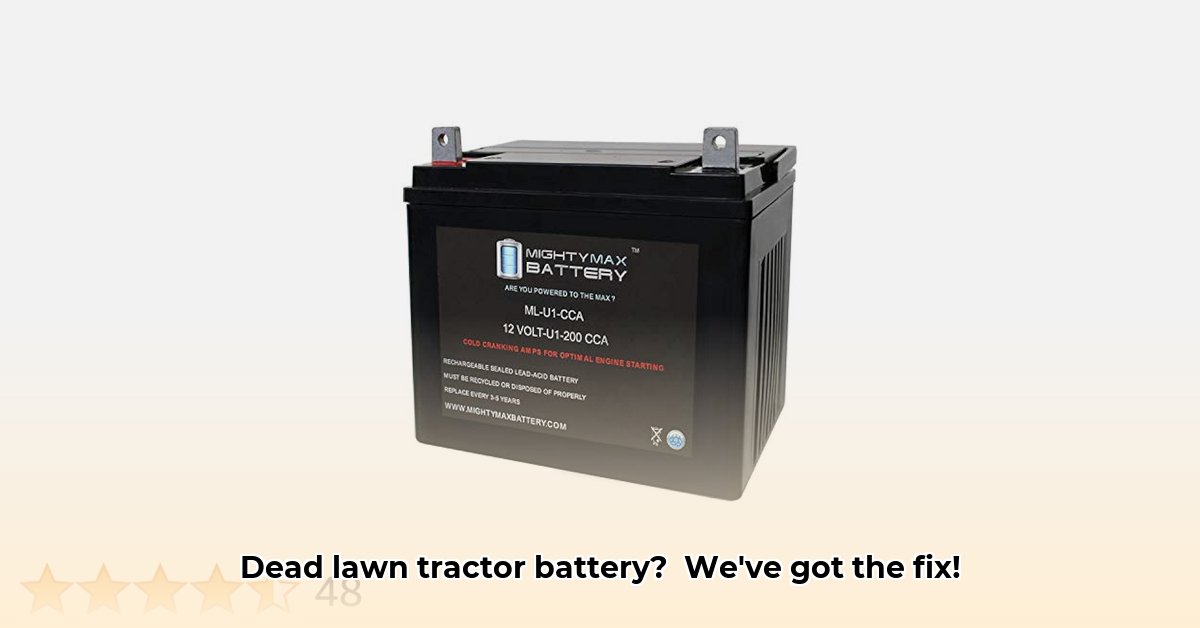
Understanding Lawn Tractor Battery U1 Issues
A dead lawn tractor battery can be incredibly frustrating, especially when dealing with a cryptic "U1" error code. This could indicate several problems, ranging from a simple loose connection to a failing battery. Before panicking and purchasing a new battery, let's methodically troubleshoot the issue. Remember, a little preventative maintenance can save you a lot of hassle and money and lessen the environmental impact over time. For more information on lawn tractor batteries, check out this helpful resource: Lawn Tractor Batteries.
Decoding "U1" and Initial Checks
The meaning of "U1" depends on your specific lawn tractor model. Consult your owner's manual for a definitive explanation. However, common symptoms of a problematic battery include a sluggish engine crank, dimmed headlights, and an overall decrease in the tractor's power.
Troubleshooting Steps: A Systematic Approach
Let's systematically check potential causes. This step-by-step process will help pinpoint the problem:
Check the Battery Terminals: Look for corrosion (a greenish or white powdery buildup). Use a wire brush and a baking soda solution to carefully clean the terminals. Tighten any loose connections. This simple step solves many battery problems. Do this every few months for preventative maintenance – it's that important!
Test the Battery Voltage: Use a multimeter (available from most auto parts stores) to measure the battery's voltage. Set the multimeter to DC volts and connect the leads to the battery terminals (positive to positive, negative to negative). A fully charged 12-volt battery should read around 12.6 volts. Readings below 12 volts indicate the battery needs charging or replacement.
Assess the Charging System: If the battery consistently needs charging, the charging system (usually the alternator) may be faulty. This requires more advanced troubleshooting; your owner's manual or a qualified mechanic can help.
Examine the Battery: Inspect the battery for any physical damage such as cracks, swelling, or leaks. These signs often indicate a failed battery.
Replacing Your Lawn Tractor Battery Sustainably
If troubleshooting points to a failed battery, replacing it is necessary. This is an opportunity to adopt a more sustainable approach:
Disconnect the Battery Safely: Always disconnect the negative (-) terminal first, then the positive (+) terminal. This prevents short circuits.
Select a Sustainable Replacement: Consider eco-friendly alternatives. Lead-acid batteries are recyclable, but their manufacture has environmental consequences. Lithium-ion batteries offer longer lifespans but require responsible recycling. AGM (Absorbent Glass Mat) batteries are spill-proof and durable, making them a good choice. Research your options for the most environmentally sound choice.
Install the New Battery: Connect the positive (+) terminal first, then the negative (-) terminal. Ensure all connections are secure and tight.
Test the Installation: Turn the ignition key. The engine should crank and start smoothly.
Maintaining Your Lawn Tractor Battery for Longevity
Proper maintenance extends the lifespan of your battery and reduces the need for frequent replacements, directly lessening environmental impact:
Regular Charging: Charge the battery regularly, especially if the tractor sits idle. Using a smart charger prevents overcharging, which can damage the battery.
Clean Terminals Periodically: Regular cleaning (every few months) prevents the buildup of corrosion significantly improving its longevity.
Store Properly: During periods of non-use (e.g., winter storage), store the battery in a cool, dry place and maintain a partial charge to prevent deep discharge.
Consider Solar Charging: If sunlight is abundant, investigate solar chargers as a sustainable power source.
Sustainable Battery Disposal: A Responsible Approach
When the time comes to replace your battery, proper disposal is crucial:
Recycle Your Old Battery: Recycle old batteries responsibly through local recycling centers, auto parts stores, or battery take-back programs.
Check Local Regulations: Refer to your local waste management services to determine appropriate disposal methods.
Support Sustainable Manufacturers: Consider choosing products from manufacturers that prioritize sustainable sourcing and responsible end-of-life management of their products.
Key Takeaways:
- Addressing lawn tractor battery issues systematically is crucial for efficient repair and minimizing environmental impact.
- Responsible disposal and recycling are essential for mitigating the environmental footprint of batteries.
- Utilizing sustainable battery options and practicing consistent maintenance significantly extends battery lifespan, reducing waste.